There is often a growing conversation around the benefits of a fully raw vegan diet compared to a wholefood plant-based approach.

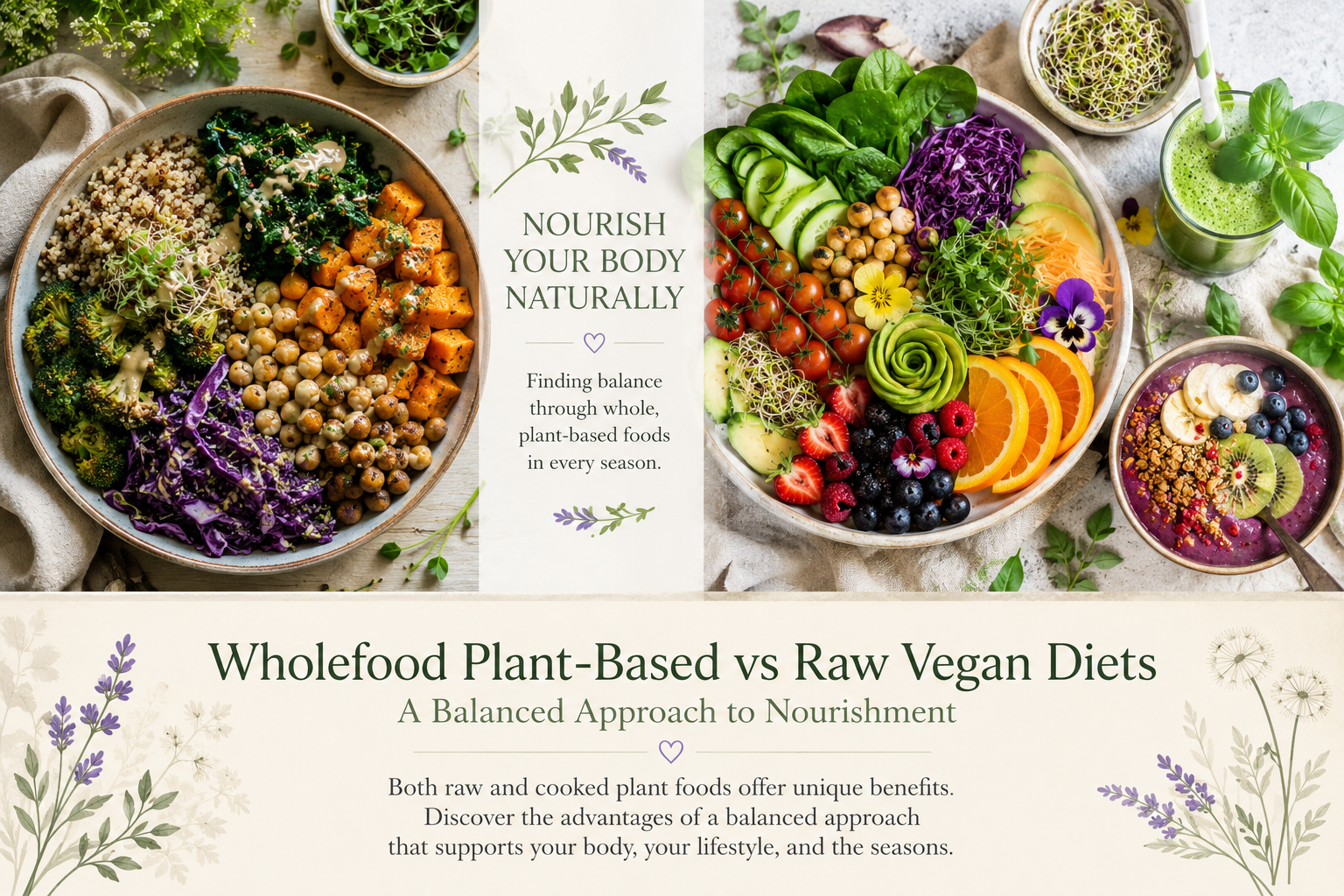
Wholefood Plant-Based vs Raw Vegan Diets
A Balanced Approach to Nourishment
There is often a growing conversation around the benefits of a fully raw vegan diet compared to a wholefood plant-based approach. As with many areas of health, the answer is not always found in extremes, but in understanding what truly supports the body as a whole.
A wholefood plant-based diet typically includes a wide variety of foods such as vegetables, fruits, legumes, whole grains, nuts, and seeds, prepared in both raw and cooked forms. A fully raw vegan diet, on the other hand, focuses on uncooked foods, often below 42°C, with an emphasis on fruits, vegetables, nuts, seeds, and sprouted foods.
Both approaches offer benefits, and both can support health in different ways. The key lies in understanding how the body responds to each.
The Role of Cooked Foods
Including cooked foods within the diet can offer several advantages.
Cooking helps to break down plant fibres, making foods easier to digest and nutrients more accessible. Certain nutrients, such as beta-carotene in carrots and sweet potatoes, and lycopene in tomatoes, become more available to the body after cooking.
Cooked foods can also be more grounding and nourishing, particularly during colder months or for individuals with sensitive digestion. Foods such as legumes and whole grains provide important sources of energy and protein, which can be more difficult to obtain in sufficient amounts on a fully raw diet.
The Benefits of Raw Foods
Raw foods bring their own unique qualities.
They are often rich in vitamin C and other heat-sensitive nutrients, and can feel light, refreshing, and cleansing. Including raw foods in the diet can support hydration and bring a sense of vitality, particularly in the warmer months.
Many people find that increasing raw foods in spring and summer aligns naturally with the body’s seasonal needs.
Digestive Balance and Individual Needs
One of the most important considerations is how the digestive system responds.
While raw foods can feel energising, they can also be more difficult to break down for some individuals, potentially leading to bloating or discomfort when consumed in large quantities.
Cooked foods, by contrast, are generally easier to digest and can provide a more steady and sustained source of nourishment.
There is no single approach that suits everyone. Each person’s digestive strength, lifestyle, and health status should be considered.
A Seasonal Perspective
From a traditional and holistic viewpoint, eating in alignment with the seasons offers a more balanced approach.
Raw foods tend to be cooling and uplifting, making them well suited to spring and summer. Cooked foods are warming and nourishing, supporting the body through autumn and winter.
Rather than choosing one approach exclusively, combining both allows for greater flexibility and resilience.
A Balanced Approach
In practice, a combination of raw and cooked whole plant foods often provides the most sustainable and supportive way of eating.
This approach allows for:
* Improved nutrient absorption
* Better digestive comfort
* Adequate energy and protein intake
* Alignment with seasonal changes
It also creates a way of eating that is both nourishing and sustainable in everyday life.
Final Thoughts
Health is rarely found in rigid rules or extremes. Instead, it is built through awareness, balance, and consistency.
A wholefood plant-based diet that includes both raw and cooked foods offers a gentle, adaptable approach that can be tailored to the individual and the seasons.
Listening to the body, observing how it responds, and making small, supportive adjustments over time is often the most effective path toward long-term wellbeing.